That piece shouldn’t be there, should it? Surprising use of parts in LEGO® MOCs
08 september 2026
A LEGO® minifigure hand belongs on a minifigure, a car tyre belongs under a vehicle, and a cape belongs on the shoulders of a hero or villain. At least, until a creative MOC builder gets hold of the piece. Then a hand can turn into a façade decoration, a wheel can become a flowerpot, and a cape can end up as a swimming fin.
This surprising use of parts is often referred to as NPU within the LEGO community. The abbreviation stands for ‘Nice Part Usage’ and revolves around the clever use of a piece in a place where you wouldn’t immediately expect it. The result can be funny, technical or exceptionally detailed. Sometimes a piece fits so well that it takes a long look to realise what it was originally intended for.
We’ll look at some striking examples from the world of LEGO MOCs and show you how you can use loose LEGO® parts from ToyPro to find surprising solutions for your next build.
What does NPU mean in the context of LEGO® MOCs?
A MOC, or My Own Creation, is a LEGO creation of your own design. Some MOCs stand out because of their size, others because of an unusual building technique or a clever choice of colours. With NPU, it’s mainly about the way individual pieces are viewed and used.
A good example of NPU isn’t simply placing a piece upside down. The shape, colour, texture or connection must genuinely add something to the model. A surprising piece works best when it fits so naturally into the creation that you almost forget what it was originally designed for.
For example, a minifigure accessory might have exactly the right curve for a fence. A Technic piece can form an interesting pattern on a façade, and a food piece can provide the organic shape that’s difficult to achieve with standard bricks.
That’s why, when building creatively with LEGO, it’s important not just to look at a part’s name. Focus on the shape. A sword doesn’t have to remain a sword, binoculars don’t have to be looking at anything, and a minifigure hand doesn’t always have to be holding something.
Minifigure hands can do much more than just wave
Minifigure hands are amongst the smallest pieces in the LEGO range. It is precisely this that makes them ideal for detailed MOCs. Their rounded shape, small opening and curved fingers make them perfect for tubes, handles, ornaments and small technical details.
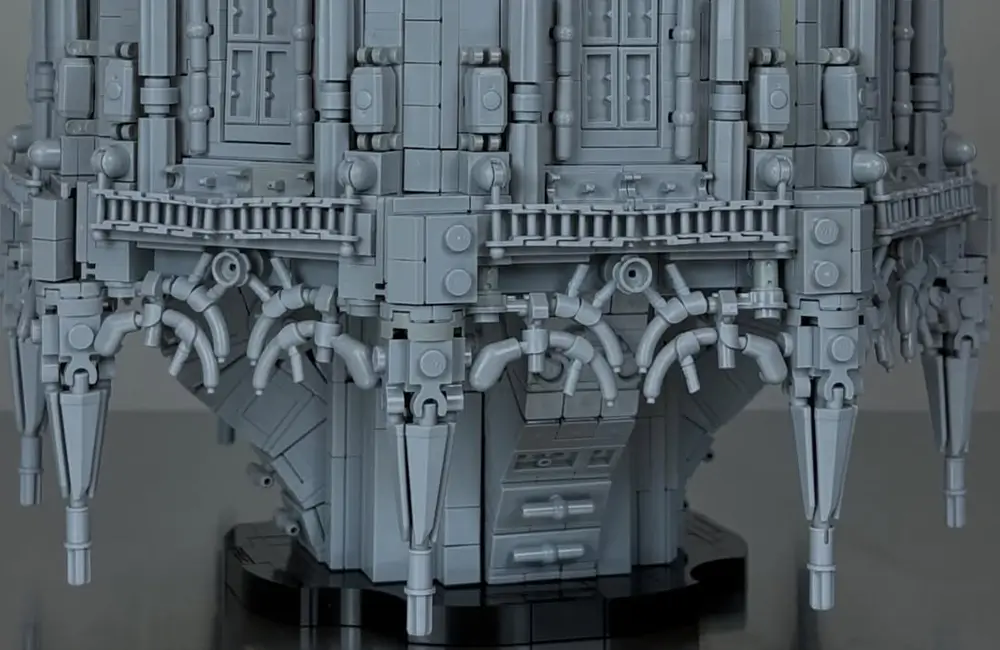
MOC builder devoureroflego, for example, used minifigure hands and arms as decorative patterns in a large Gothic tower. There, the hands, together with hot dogs, roller skates, whisks, syringes and Technic parts, form an intricate pattern reminiscent of the delicate stonework of a cathedral.
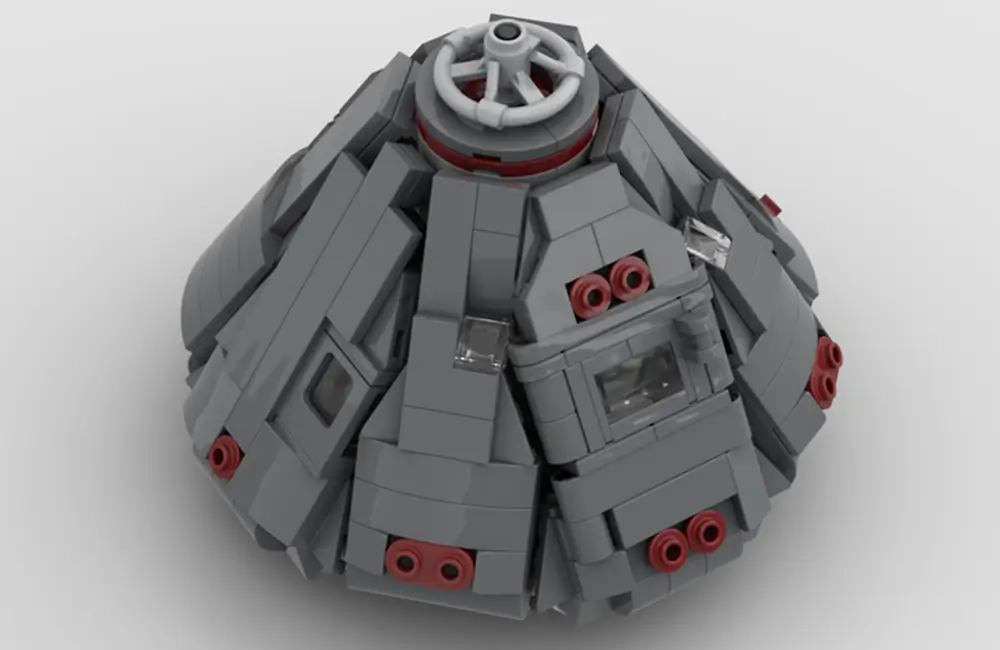
Minifigure hands can also come in handy in technical models. In a detailed Apollo Command Module by DadBricks, three minifigure hands are positioned around the docking ring. The hands do not represent human hands here, but form a small technical component of the space capsule.
Minifigure hands can also be used as door handles, bumper parts, small horns, robot fingers, lights, ventilation openings or decorations on buildings. Placing several hands side by side also creates a repeating pattern that is much more intricate than you can achieve with standard bricks.
So don’t just look at complete figures, but also check out the individual LEGO® minifigure parts at ToyPro. Arms, hands, legs, heads and torsos can be surprisingly useful as building materials for models that don’t feature any minifigures at all.


Keys, roller skates and tools as building elements
Axes, wrenches, microphones, binoculars, roller skates and musical instruments are designed to give a minifigure more character. For a MOC builder, however, they are primarily small parts with interesting shapes and connections.
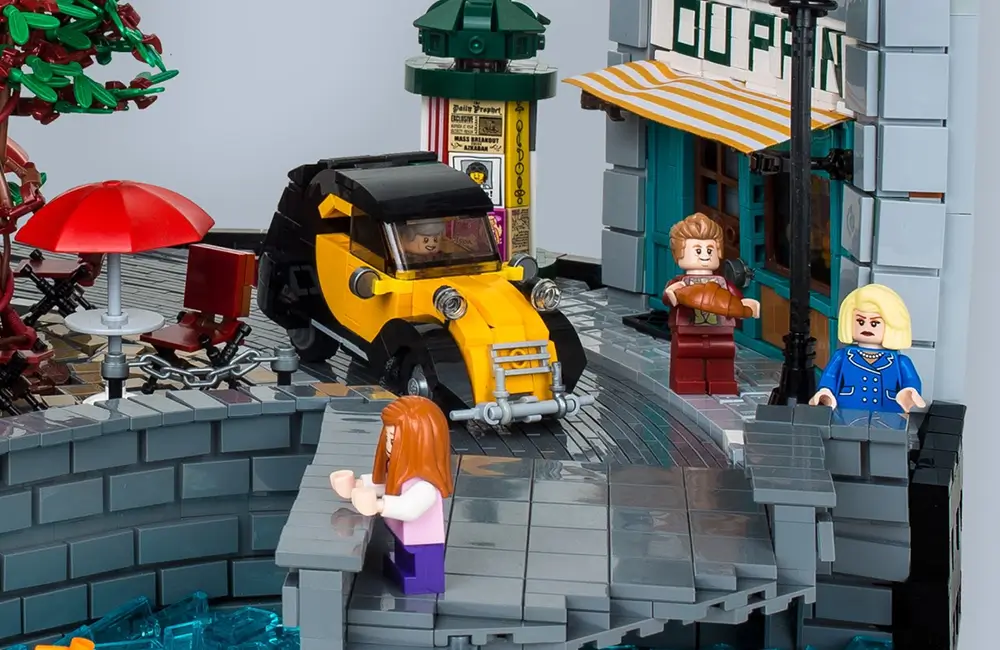
A fine example is a city model by Markus Rollbühler in which wrenches, still attached to the shared moulding frame, are used as an elegant balcony railing. In the same model, minifigure hands and hook hands form the bumper of a small Citroën. The parts are small, but they provide precisely the detail that makes the vehicle recognisable.
Roller skates also prove to be surprisingly versatile. Thanks to their small wheels and stud connections, they can be transformed into eyes, lights, mechanical joints, parts of a spaceship or decorative features on a building. A row of roller skates placed side by side also creates an interesting texture.
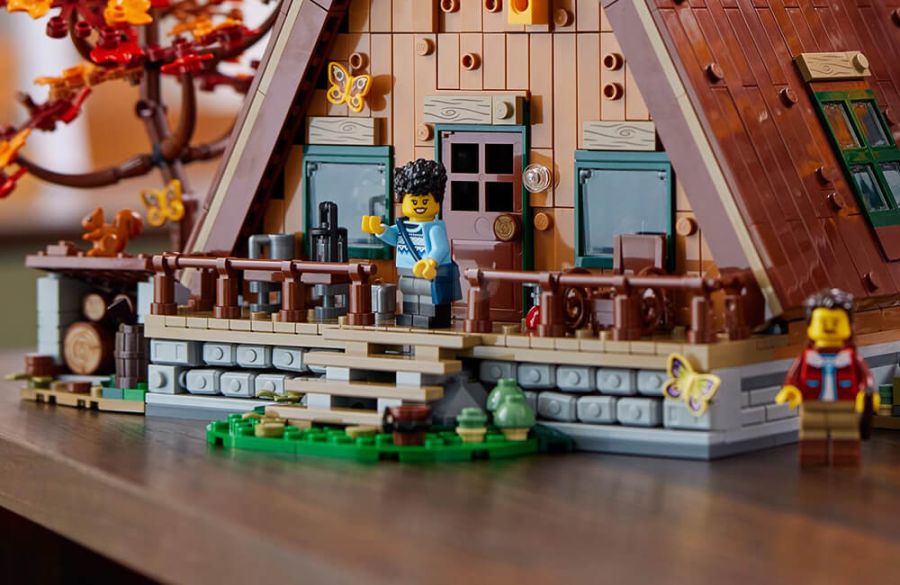
Tools are also particularly useful. A spanner can become part of a robotic arm, a wrench fits into an industrial façade, and a hammer can be used as a foundation, support beam or decorative element. In the LEGO Ideas A-Frame Cabin, several hammers were even incorporated into the building’s brick foundations.
When searching for parts, pay particular attention to accessories with a rod, clip, handle or hollow connection. These attachment points make it possible to incorporate a part sideways, at an angle or upside down into a model.
In the category of individual LEGO® minifigure accessories, you’ll find small parts that can do much more than just dress up a minifigure. Tools can become parts of a machine, musical instruments can be transformed into façade details, and weapons can be used as fencing, plants or parts of a spaceship.
A hotdog doesn’t have to be on a bun
Some pieces have such a recognisable shape that it seems almost impossible to see them as anything else. A LEGO hotdog is a good example of this. Yet builders regularly use this piece as a curved decoration, handle, tube, edge or architectural detail.
In devoureroflego’s Gothic tower, hot dogs are combined with minifigure hands and whisk elements. By threading a hot dog through several whisk elements, an intricate criss-cross pattern is created that fits perfectly with the model’s dark cathedral style.
The same applies to LEGO food in general. A croissant can become a moustache, an eyebrow, a horn or a decorative ornament. A scoop of ice cream can serve as a plume of smoke, a tree top, a cloud or part of a tower. Thanks to their curved shape, a sausage, carrot or banana can suddenly fit perfectly into an animal, vehicle or fantasy building.
Colour plays an important role here. A white hot dog barely resembles food once it’s incorporated into a spaceship. A golden-coloured carrot can become an elegant detail on a castle, and a black croissant could even serve as a horn, moustache or handle.
When looking at individual LEGO® food pieces, it’s therefore a good idea to put thoughts of kitchens, restaurants or picnics aside for a moment. Look at the curves, colours and ways they can be connected. Perhaps among the LEGO food pieces lies exactly the missing part for your spaceship, castle or fantasy animal.


Wheels and tyres don’t have to go anywhere
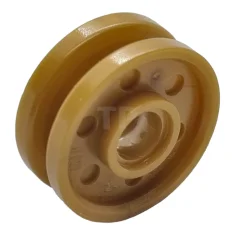
Wheels and tyres are among the best-known vehicle parts. Yet, thanks to their round shape and varied structures, they’re also suitable for completely different constructions. A wheel can become a flowerpot, a window, an engine part, a loudspeaker, a turbine or a decorative pattern.
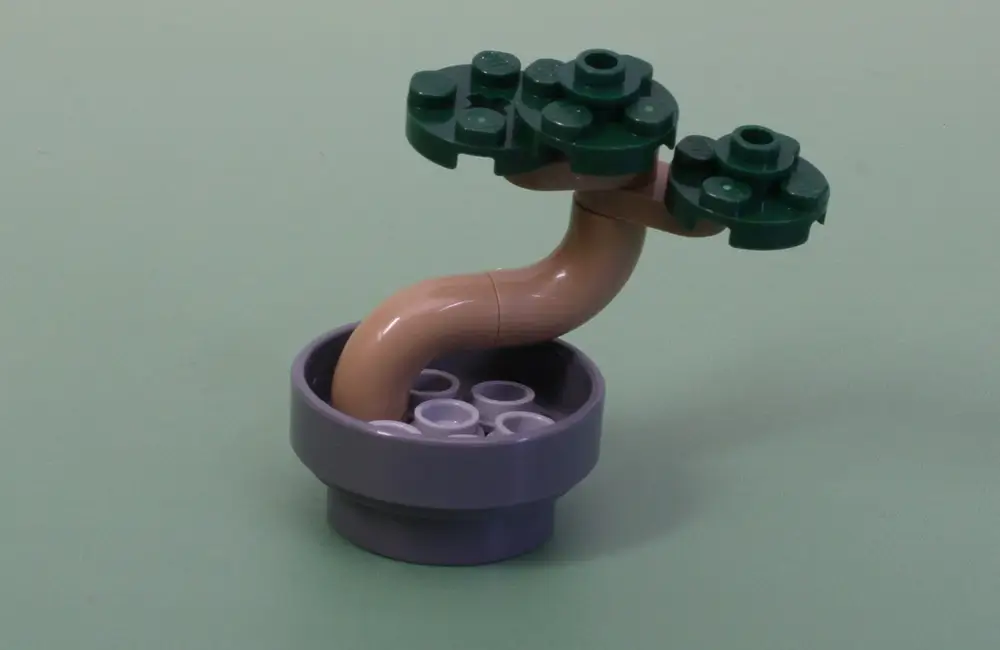
MOC builder Duncan Lindbo used a Technic wheel as a pot for a compact bonsai tree made up of just a few parts. The wheel’s round opening and technical structure immediately lend it a convincing scale and shape.
Other builders use small tyres wrapped around round tiles to give machines, robots and vehicles more structure. By incorporating a wheel sideways into a model, the part can also be transformed into a fan, motor, mechanical eye or futuristic doorway.
Rubber tyres offer yet more possibilities. By turning tyres inside out or placing them end-to-end, you can create tentacles, tubes and organic shapes. Small tyres and caterpillar tracks can be used as the soft ear pads of a pair of headphones, the ribbed surface of a machine or the skin of a fantasy creature.
An added bonus is that LEGO wheels and tyres come in many different sizes. This means you can work with the same basic idea on a micro scale, a minifigure scale or in a large display model.
So don’t just look at all the individual LEGO® wheels and rims when you’re building a car. These round parts can also come in handy for plants, buildings, robots, spaceships and fantasy creatures.


Capes and fabric parts add movement to a MOC
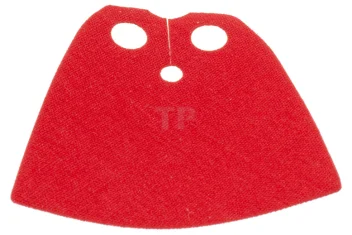
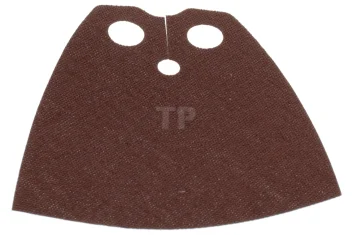
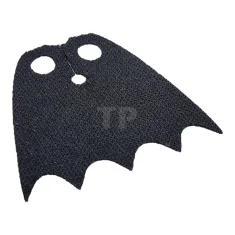
Most LEGO parts are rigid and always retain the same shape. Fabric parts are an interesting exception to this. Capes, flags, sails and other flexible elements can bend, hang and move. This makes them suitable for clothing, tents, wings, fins and landscapes.
In a modern interpretation of the classic LEGO Slizer Scuba, BigBrickStan used various capes as the diver’s flippers. Thanks to the shape and flexibility of the material, the flippers look much more natural than if they had been built entirely from hard bricks.
Other builders use capes as ears, eyebrows, facial expressions, flower petals or parts of a tent. A sail can become a roof, a blanket or an item of clothing, and a flag can be transformed into an entire roof surface in a micro-scale model.
Fabric is particularly useful when a hard plate is too thick or too angular. By combining several fabric parts, you can create flowing lines that suit animals, characters and fantasy creations well.
Bear in mind that fabric parts cannot all be attached in the same way. Some capes have openings for a minifigure’s neck, whilst flags and sails are often wrapped around a rod or mast. The attachment points can, in fact, form the basis of a new building technique.
Among the individual LEGO® fabric parts, you’ll find capes, flags, sails and other flexible elements that allow you to add soft shapes and extra movement to a MOC.
Technic parts create unexpected structures
LEGO Technic parts are usually used for moving models, vehicles, gearwheels and sturdy structures. However, the openings, ridges and complex shapes can also be used purely for decorative purposes.
Technic pins, for example, are ideal as small spires, exhaust pipes, connection points or industrial details. Gears can be transformed into windows, floors, machines or ornaments. An engine panel can suddenly become part of a spaceship, robot or futuristic building.
In devoureroflego’s Gothic tower, Technic pins are combined with minifigure hands, guards and other small parts. This creates a façade that lies somewhere between a historic cathedral and a science-fiction structure.
It is precisely this combination that makes NPU interesting. You don’t have to choose between classic bricks, minifigure accessories or Technic. By using different types of parts side by side, you can create structures that would be almost impossible within a single traditional LEGO category.
Even small tools can add extra detail to a technical model. A ratchet can become a lever, a spanner can be part of a machine, and a screwdriver can turn into an antenna, an exhaust pipe or a tube.
So, as well as standard bricks, be sure to check out the individual LEGO® Technic parts at ToyPro. Connectors, gears, pins, axles and panels, in particular, have shapes that can add extra detail in unexpected places.


Animal parts take on a whole new lease of life
Using a LEGO animal part in a larger build might sound strange, but it happens more often than you think. Wings, tails, claws, horns, heads and legs have organic shapes that are difficult to replicate with standard bricks.
An elephant’s ear, for example, can become the fin of a large sea creature. Dinosaur tails can be used as stems, tentacles and curved structural elements. An animal’s head can be transformed into a robot’s head, whilst small crabs, snails and starfish fit perfectly into coral, plants or alien landscapes.
Even whole animals can sometimes be incorporated into a larger model. Frogs are regularly used as decorations, plants, eyes or architectural details. Snakes are suitable as cables and tree roots, whilst bird wings can become leaves or parts of a fantasy helmet.
The trick is to temporarily forget which animal you’re looking at. Turn the piece over, view it from the side and pay attention to the connections. A tail that doesn’t work when standing upright might, when laid flat, have exactly the right curve for a vehicle or building.
So don’t just view the individual LEGO® animals and animal parts as inhabitants of a farm, zoo or forest. Their organic shapes can be a valuable addition to robots, plants, spaceships and fantasy figures.
Official LEGO® sets also use surprising parts
NPU isn’t just for fan builders. The designers of official LEGO sets also regularly use parts in unexpected ways. Large display sets and detailed buildings, in particular, are full of parts originally created for a different theme.
Think of minifigure hammers used as stone foundations, car rims that turn into decorative windows, or robot parts that suddenly appear in a building. In LEGO NINJAGO City models, accessories such as crowbars, megaphones and fans are regularly incorporated into roofs, fencing and technical installations.
This shows that LEGO parts aren’t tied to a single theme. A part designed for a car might turn up in a castle years later. An accessory from a Collectible Minifigure might ultimately be exactly the missing detail for a building, flower or machine.
As a result, new parts not only lead to new sets, but also to new building possibilities. As soon as an eye-catching part becomes available in multiple colours, it often becomes even more interesting for MOC builders.
How to train yourself to look at LEGO® pieces differently
Surprising uses for parts usually don’t start whilst building, but whilst sorting. Pick up a part and examine it from all angles. Turn it upside down, lay it on its side and see which connections are available.
Don’t just focus on studs. Many minifigure accessories have a rod with a standard diameter that fits into clips and minifigure hands. Technic parts have openings for pins and axles, whilst animal parts sometimes feature unexpected clips or hollow connections.
Colour can also help to conceal the original function. A brown hot dog still looks very much like food, but in white, black or gold, the same piece takes on a completely different appearance. A silver key looks more like a technical detail, whilst a green key can become part of a plant.
Repetition is another key technique. A single minifigure hand remains recognisable as a hand, but twenty hands placed side by side can transform into an elegant façade. A single roller skate is a toy, whilst a row of roller skates forms a mechanical pattern or a roof edge.
Try combining a piece with something it wouldn’t normally go with. Place a food piece between Technic pins, use a cape on a vehicle, or combine an animal’s tail with ordinary plates. It is precisely the clash between different categories that often yields the best ideas.
Turn three random pieces into a small building challenge
A simple way to practise NPU is to choose three random parts from your stash. For example, take a wheel, a minifigure accessory and a food part. Then try to build a small model in which all three parts are given a different function.
You can also order the same piece several times and explore what patterns you can create with it. A set of keys can become a fence, several croissants can form a wavy edge, and a collection of roller skates can turn into a robot’s eyes.
Start small. You don’t need to design an entire castle or spaceship straight away around a single unusual part. A flowerpot, vehicle, robot head, section of façade or micro-scale building is often enough to try out a new technique.
If an idea doesn’t work, you’ll still have learnt something about the part’s dimensions and connections. In MOC building, a failed attempt is often the quickest route to a better solution.
Always use parts without forcing them
Not every surprising combination is automatically suitable for long-term use. Some builders experiment with connections where parts are slightly bent, clamped or put under tension. Such techniques may look impressive, but can cause damage to a part in the long run.
You should therefore always check whether parts can be fitted and removed without applying excessive force. If a part visibly deforms or only fits with a great deal of pressure, it is wise to find a different connection.
Using clips, hinges, turntables, bar elements and SNOT pieces, you can create most angled or sideways connections without damaging your LEGO pieces. This ensures your MOC remains not only creative, but also sturdy and reusable.
How to find surprising loose LEGO® parts at ToyPro
At ToyPro, you can search by a part’s name, Design ID or Element ID. The Design ID usually refers to the shape, whilst the Element ID indicates the combination of shape and colour.
If you’re not yet sure which piece you need, you can also browse through the different categories. Don’t just look at the most obvious category for your MOC. For a castle, for example, car parts, food pieces, Technic elements and minifigure accessories might also be of interest.
If you’ve found a great building technique on Rebrickable or another LEGO fan site, take a close look at the parts used. You can then use the part number to check which colours and variants are available at ToyPro.
What’s more, a different colour can completely transform an existing build. The same hot dog piece, used as a food item in dark red, can become part of a spaceship when in white. A black wheel fits into a machine, whilst a gold-coloured wheel can serve as an ornament or a futuristic detail.
Thanks to the creative LEGO® MOC builders
We’d like to thank, amongst others, devoureroflego, DadBricks, Markus Rollbühler, Duncan Lindbo and BigBrickStan for sharing their creative builds. Their MOCs show that even the smallest or most specialised LEGO piece can take on a completely unexpected function.
Designs like these are a great source of inspiration for anyone who builds with loose LEGO pieces. You don’t have to recreate a MOC exactly to learn something from the techniques used. Sometimes, just one unexpected piece is enough to take your own creation in a new direction.
The strangest piece can be the best solution
Surprising uses for parts make it clear why building with loose LEGO bricks never gets boring. Every new part can be used not only for its intended purpose, but also for dozens of applications that nobody has thought of yet.
Next time you come across a minifigure hand, a hot dog, a cape or a car tyre, don’t just pop it straight back into the usual sorting bin. Turn the piece over, look at the connections and think about what else its shape could represent.
Discover all the loose LEGO® pieces at ToyPro, combine categories that normally have little to do with one another, and turn that one odd piece into the most eye-catching detail of your next LEGO MOC.
Discover all Lightailing light sets here

Receive the weekly ToyPro newsletter and stay up to date on the latest news about ToyPro and LEGO®, MOCs and much more. Discover LEGO®
Successful! ToyPro will keep you updated from now on. Welcome to the club.