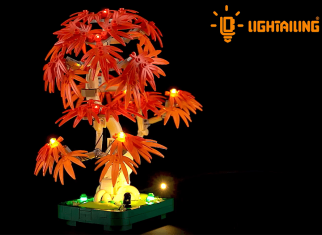
Build a LEGO® fall landscape with colorful leaves
13 October 2026

Outside, the trees are changing color. It’s a great time to give your LEGO® city, park, or landscape an autumnal look. With orange leaves, dark shrubs, and a winding walking path, you can create a classic autumn scene. With individual pieces, you can choose the colors, shapes, and sizes entirely on your own.
Want to build a LEGO® fall landscape on a rainy afternoon or during fall break? Start small. A single tree next to a bench or a small patch of woods next to a house can be enough. Below, you’ll find practical building ideas and a selection of LEGO® plant pieces available at ToyPro.
First, choose the colors for your LEGO® fall landscape
A convincing fall landscape starts with a limited color palette. For example, use brown for tree trunks and soil, orange for the foliage, and dark green for shrubs that haven’t changed color yet. By repeating colors in multiple places, the individual pieces come together to form a single landscape.
Don’t make every tree exactly the same. One tree might still be mostly green, while another has already lost almost all its leaves. That contrast makes a small LEGO® scene more interesting to look at.
For warm accents, you can use the round 1 x 1 tile with leaves in orange, bright light orange, and reddish orange. Distribute the colors in small clusters throughout your scene. This creates more cohesion than if you were to scatter each color completely at random.


Building LEGO® Fall Trees: Start with the Shape
First, build the trunk and a few branches before adding leaves. View the tree from the front and from the side. A trunk that’s slightly staggered often looks more natural than a perfectly straight stack of bricks. Make sure it’s firmly attached to the base, especially if the tree will have a wide canopy.
Next, leave parts of the branches visible. An autumn tree doesn’t have to be a solid green sphere. Open spaces among the foliage help convey the season and better showcase the tree’s structure.
For a tree along a street, you can keep the crown relatively compact. In a forest scene, on the other hand, you can combine different heights. Place a smaller tree slightly in the foreground and a taller one behind it to suggest more depth.
Combine Different Leaf Shapes
Not only color, but also the shape of the foliage determines the overall look. Small leaf elements are suitable as local accents. Larger leaf pieces can form the basis for a shrub or tree crown. Layered leaf shapes add variety to the edges.
For example, take a look at the round 1 x 1 plant plate with hanging layered leaves in bright orange and the round 1 x 2 plant plate with layered leaves in reddish orange. Combine these warm hues with dark green 6 x 5 plant leaves to create a landscape where fall is still in full swing.
When combining elements, always check the connections. Not every plant part is attached in the same way. Build a small test piece first before working out a complete tree crown.




Add a path and a layer of fallen leaves to the forest
A forest path clearly shows where minifigures can walk through the landscape. Let the path meander slightly and avoid making it the same width throughout. Use small LEGO® plates and tiles to create staggered edges.
Place a few more leaf accents along the sides of the path than in the middle. Think of a small pile under a tree, a few leaves by a bench, or a strip along a fence. Also leave patches of bare earth visible. A forest floor doesn’t need to have detail on every stud.
A slight difference in elevation also helps. Just one or two extra layers of plates under a bush can create a roadside embankment. This gives your fall landscape some depth without having to build an entire hill right away.
A building idea for fall break: the park bench
For a straightforward project, choose a small building plate or a base made of firmly connected plates. Build a single fall tree at the back, place a simple bench next to it, and have a walking path run past the tree. Then finish off the edges with low vegetation.
Finally, add a minifigure taking a break or going for a walk. That’s all it takes to tell a recognizable story. By placing the bench, the walking path, and the tree slightly off-center, the scene takes on a playful layout.
What parts do you need for a LEGO® fall landscape?
The basics include a sturdy base, pieces for trunks and branches, leaves in a few coordinating colors, and small plates or tiles for the ground. How many you’ll need depends on the size and density of your design. So start with one tree or shrub and expand from there.
Check out the individual LEGO® leaves and plant pieces at ToyPro and choose the shapes and colors for your design. That way, you can build an autumn park, forest edge, or garden that fits your LEGO® world.
Discover all Lightailing light sets here

Receive the weekly ToyPro newsletter and stay up to date on the latest news about ToyPro and LEGO®, MOCs and much more. Discover LEGO®
Successful! ToyPro will keep you updated from now on. Welcome to the club.